A letter to myself
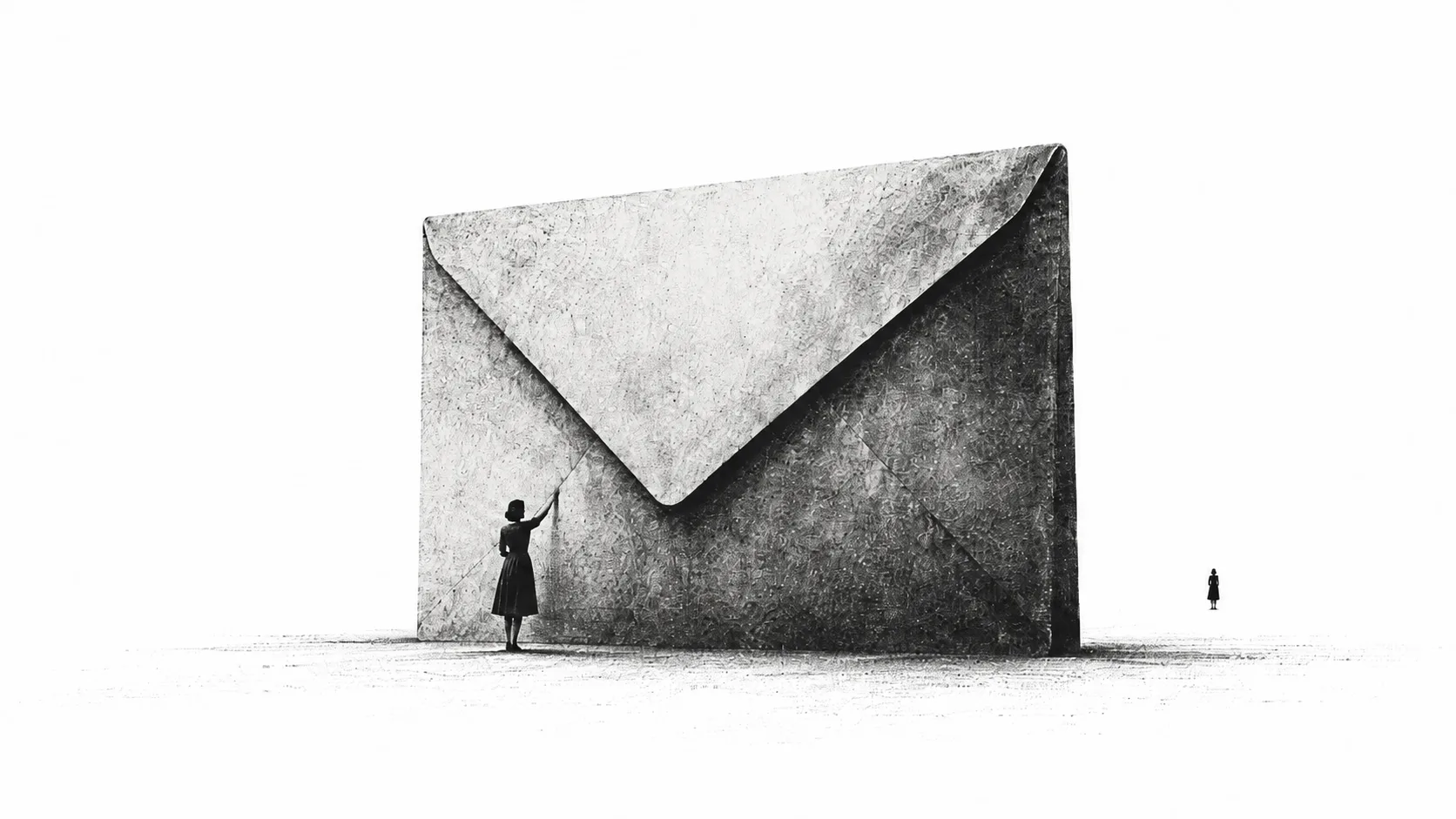
“I’d like you to be proud of me when you look back on this time.”
I wrote that in a letter with a deferred delivery date. I wrote it tenderly, the way you write to someone worth looking after in advance.
That kind of tenderness is rare, sadly, because we keep our future selves… at a distance. Researchers at Stanford University looked at what happens in the brain when we think about ourselves ten years from now.
How does the brain react when you think about…
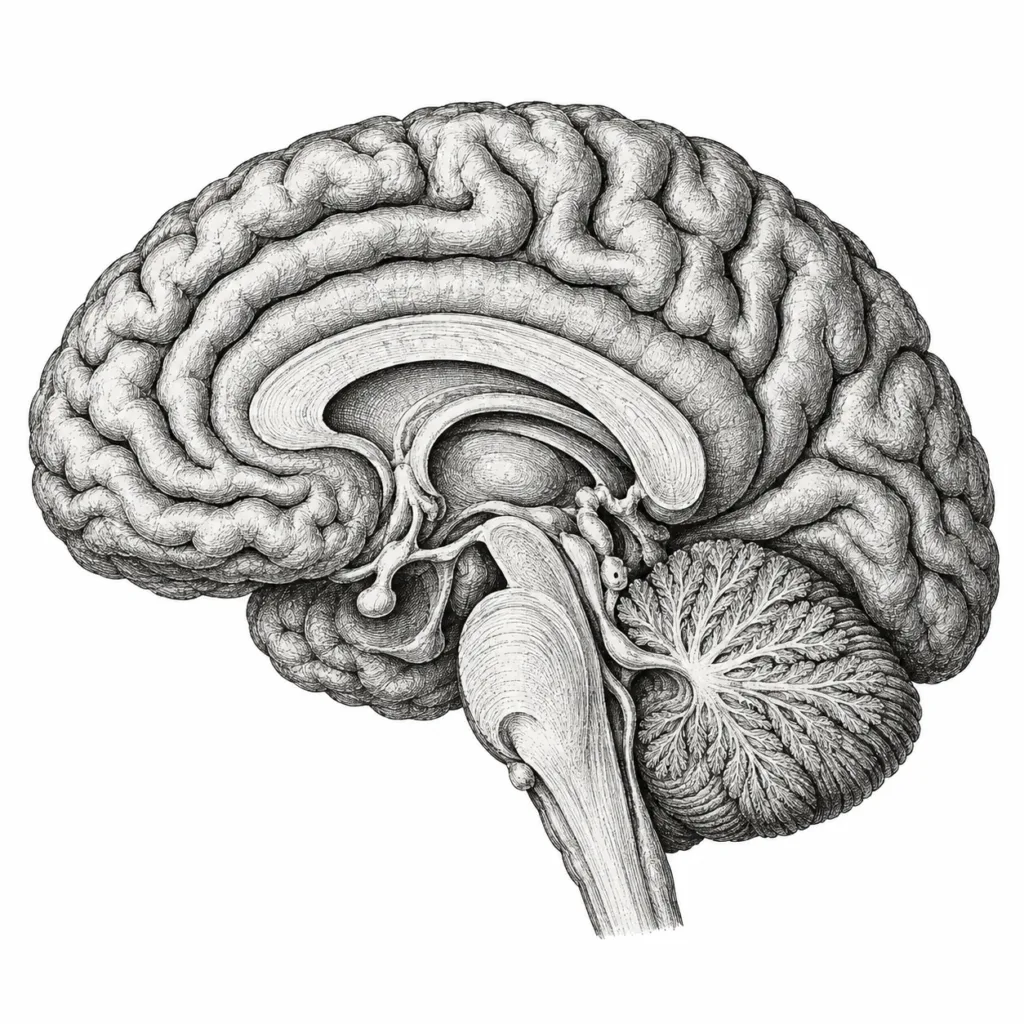
A diagram based on the Stanford study (2009).
It turned out to respond much as it does when we think about someone we have never met. That is why it is so easy to leave things for later, as if someone else were going to deal with them: the postponed check-up, the postponed saving, the postponed decision. Except that someone is us.
My letter did exactly this: it turned a stranger into someone I want to take care of.
A team at the MIT Media Lab went a step further and let people talk to that person. They built an app in which artificial intelligence plays you at sixty. It has your aged face, knows your plans and remembers “memories” from years that have not happened yet. In a study with more than 340 young people, a single such conversation was enough for participants to feel clearly closer to their future selves.
This way of getting closer to your future self is something I decided to share with my students. I asked them to answer one question: what do I want to grow over the next year? The answer will come back to them as a letter once that time has passed. More than 150 letters were written.
Each of them is now waiting for its addressee, just as mine is waiting for me.
Before they arrive, though, they are already at work. Psychologists at Kyoto University asked several hundred people who were going through a hard time to write to their future selves. After a few minutes of writing they felt better, because they came to believe that what they were living through was only a stage. On the other side of a hard time, someone appeared who was waiting.
My letter is waiting there too. And I already know who will open it.
My students’ letters will arrive on 1 October 2027. If you would like to write yours, join us. It is a good moment to get to know someone worth caring for.
Sources
H. Ersner-Hershfield, G. E. Wimmer, B. Knutson, Saving for the future self: Neural measures of future self-continuity predict temporal discounting, Social Cognitive and Affective Neuroscience, 4(1) (2009).
P. Pataranutaporn, K. Winson, P. Yin, A. Lapapirojn, P. Ouppaphan, M. Lertsutthiwong, P. Maes, H. E. Hershfield, Future You: A Conversation with an AI-Generated Future Self Reduces Anxiety, Negative Emotions, and Increases Future Self-Continuity, arXiv (2024).
Y. Chishima, I-T. H-C. Liu, A. E. Wilson, Temporal distancing during the COVID-19 pandemic: Letter writing with future self can mitigate negative affect, Applied Psychology: Health and Well-Being, 13(2) (2021).
Read next

Oblique Strategies for the Algorithm
In 1975 a small black box appeared. Title: Oblique Strategies.
Creative traces
A sandwich holder, a notebook on wheels and a key with a torch. What do these three objects have in common?
Design Thinking Toolkit
Looking for more inspiration?
Warm-ups, tools, videos, stories and data for working with the design thinking method. Pick one and get started.
Open the toolkit →