Door after door
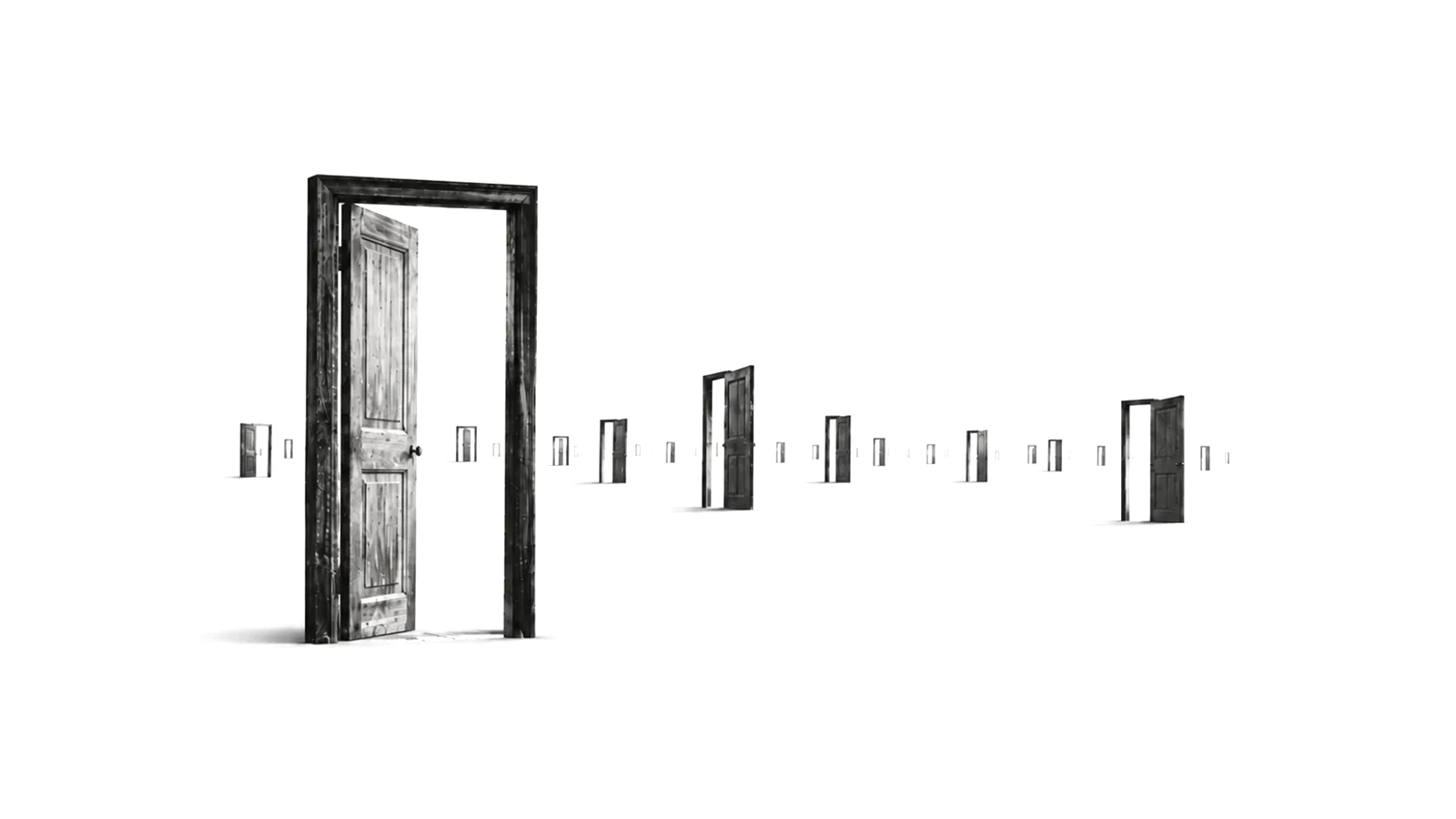
Behind every door, we expect to find an answer. And behind it there is often another door.
Psychology has a gentle explanation for this. Each of us carries a need to settle things quickly, with a clear and final answer. When that need takes over, we grab the first reasonable solution and stop searching. Meanwhile, the ability to stay for a while with what is still unclear goes hand in hand with more creative thinking (Mahmoud et al., 2023). And people who calmly say “I don’t know yet” put more effort into learning what they have yet to master (Porter et al., 2020).
So sometimes the answers multiply. And sometimes the questions do, and that is progress too. It is worth staying a little longer in that uncertainty, instead of closing the door with the first answer that comes along. That is exactly where creative thinking begins, and “I don’t know yet” turns out to be the best starting point for an answer.
And if you would like to practise opening doors without knowing what lies behind them, step into our Four Rooms.
Sources
N. E. Mahmoud, S. M. Kamel, T. S. Hamza, The correlation between architecture students’ ambiguity tolerance and their creativity: negative capability inside the design studio, Creativity Studies (2023).
T. Porter, K. Schumann, D. Selmeczy, K. Trzesniewski, Intellectual humility predicts mastery behaviors when learning, Learning and Individual Differences (2020).
Read next

Oblique Strategies for the Algorithm
In 1975 a small black box appeared. Title: Oblique Strategies.
Creative traces
A sandwich holder, a notebook on wheels and a key with a torch. What do these three objects have in common?

Design Thinking Toolkit
Looking for more inspiration?
Warm-ups, tools, videos, stories and data for working with the design thinking method. Pick one and get started.
Open the toolkit →