
Very Little Brain
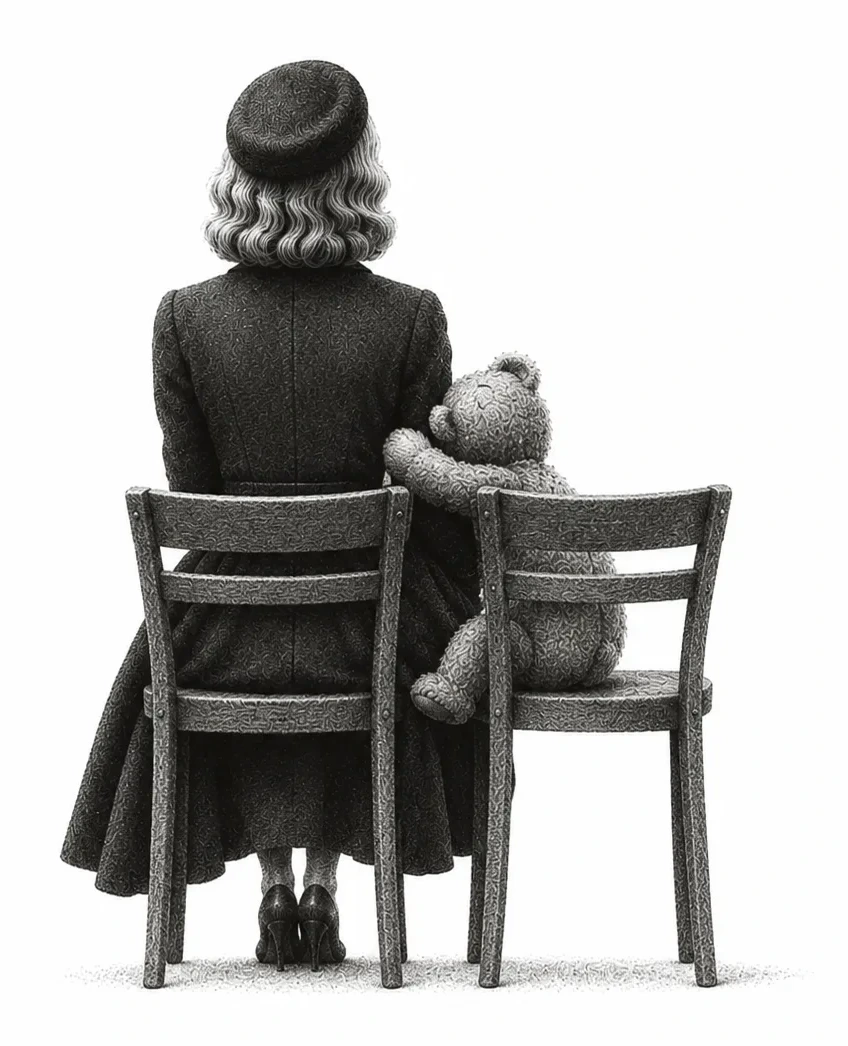
The best advice I got this autumn came from a Bear of Very Little Brain.
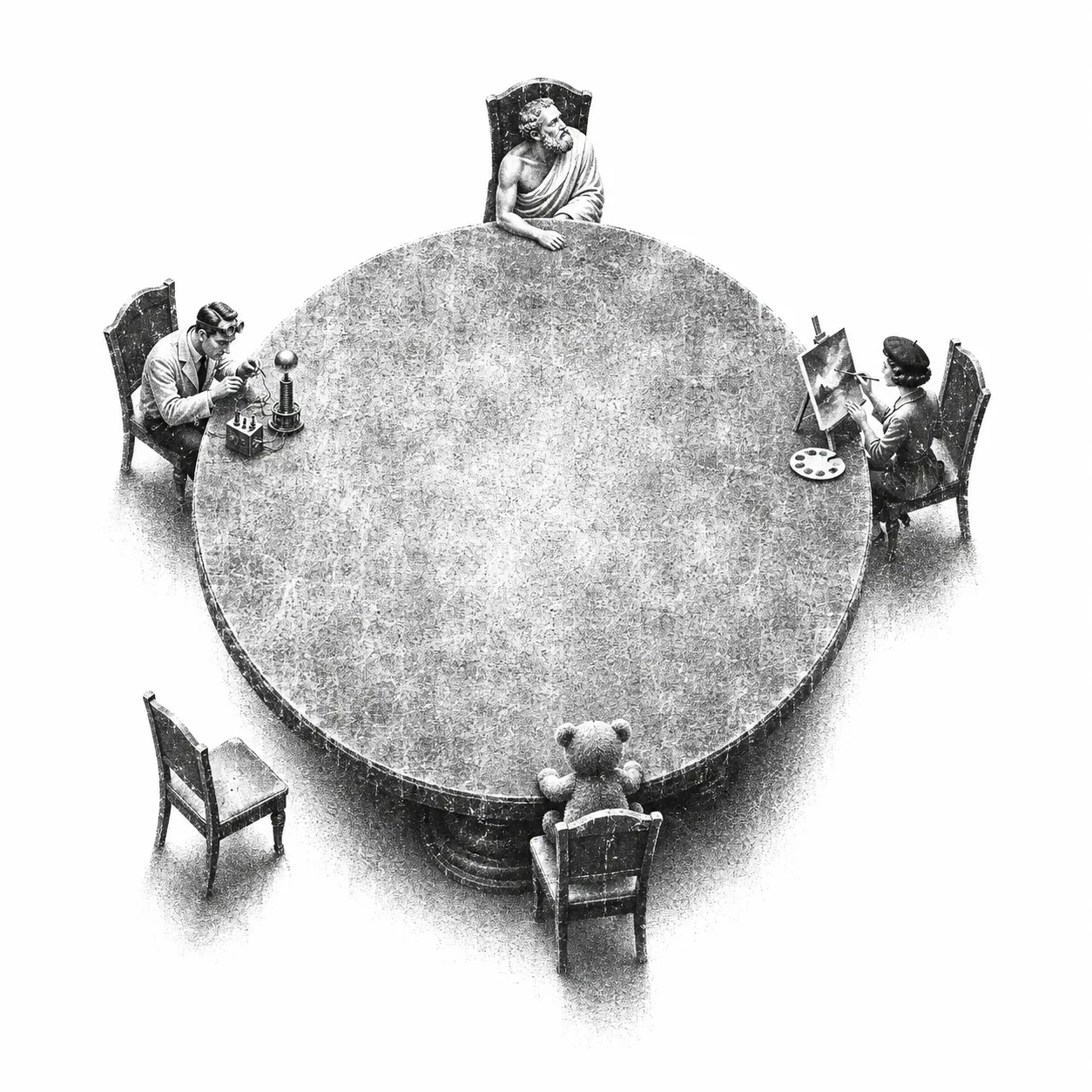
I was testing a tool, Creativity Guild, which I wanted to share here. It works like this: you describe your problem and invite guests to the table. They can be inventors and discoverers, artists and poets, philosophers from different eras, and even fictional characters from the books we grew up with. Each “person” suggests a few solutions in their own way. Then they can combine the ideas, argue over the best one or agree on it together.
And – back to the testing – I was supposed to type in something just to try it out, say, how to wake up students in early morning classes. I typed in something more personal than I had planned. Wisława Szymborska, Marcus Aurelius, Frida Kahlo and Winnie-the-Pooh sat down at the table. Each of them gave me three pieces of advice on how to solve my problem. I read them all and stopped at one:
“Take the same short walk a few days in a row and each time notice one thing that has changed. It’s good to see that the world is moving.”
Winnie-the-Pooh
I sat over that sentence for a long while. The bear, paw in the honey jar, had offered me, in his own style, “a little something”. And he hit exactly the right spot. How is that possible?! – I thought. Then I remembered that innovation researchers have known this mechanism for a long time.
Strong evidence? Lars Bo Jeppesen and Karim Lakhani looked at scientific problems that dozens of companies had worked on for a long time, in-house and without success. In the end the companies announced an open contest and anyone could try. Who actually solved them? Often someone from outside the problem’s field. People who rated the task as far from their own specialism hit the mark more often than those from its very centre. One chemistry problem was cracked by a physicist, another, a toxicology one, by a protein crystallographer. The fresh look came from another world.
And what if there is no one from another world at hand? Denis Dumas and Kevin Dunbar checked whether it is enough to imagine them. They asked students to come up with uses for ordinary things: a fork, a shovel, a trumpet. Some were to pretend to be an eccentric poet while doing it, others a rigid librarian*, and still others simply to be themselves. Who came up with the most? The “poets”. The fewest? The “librarians”. And those who stayed themselves landed in the middle. It was enough to become someone else for a moment to think differently.
The Guild does exactly that. It seats guests from completely different worlds at one table: from a research lab, a painter’s studio, ancient Rome and the Hundred Acre Wood. Each brings their own way of seeing and approaches the problem like someone from the outside.
Tomorrow I’m going on that walk.
And if you have a problem that’s bothering you, convene the Guild. It can be something at work, a project that’s stuck, or something more personal than you plan. And don’t be surprised if the wisest voice belongs to the Bear of Very Little Brain.
* The authors stress that this is a stereotype they wanted to use, and that they consider librarians people with imagination. So do I.
Sources
L. B. Jeppesen, K. R. Lakhani, Marginality and Problem-Solving Effectiveness in Broadcast Search, Organization Science, 21(5) (2010).
D. Dumas, K. N. Dunbar, The Creative Stereotype Effect, PLOS ONE, 11(2) (2016).