
Oblique Strategies
Cards with short, enigmatic prompts that help you see a problem from a different side. Draw one and treat it as a hint.
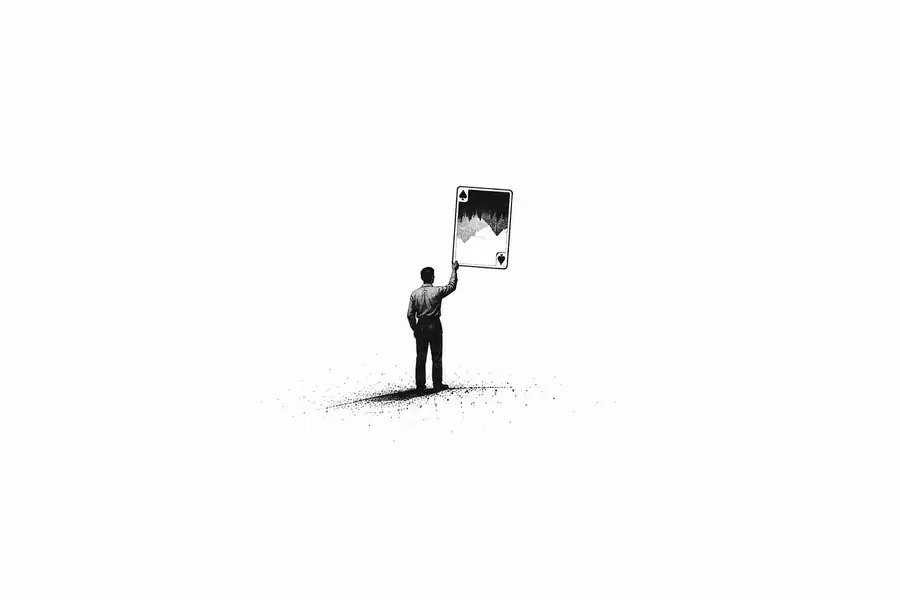
Why draw a card?
Oblique Strategies is a deck of cards created in 1975 by Brian Eno and Peter Schmidt. Each card carries a short prompt, for example “Turn it upside down”. It is a random stimulus: you set your problem against the prompt you drew, and your brain starts looking for new paths. Often one sentence is enough to get you moving!
- 1Write down the problemPut what you are working on into one sentence.
- 2Draw a cardClick the button and read the prompt that appears.
- 3Look for associationsWrite down what comes to mind when you set the card’s prompt against your problem. The ideas can stay rough, because their job is to open up new leads.
- 4Capture the ideasList every idea, the odd ones too. You can combine this technique with brainstorming.
How to run this warm-up
Prepare cards, dice or photos, explain why a random stimulus works, and make sure ideas get written down.
A vague stimulus sets associations in motion. The prompts are deliberately open and leave the solution to you.
Oblique Strategies, Story Dice or random photos from Wikimedia and Unsplash all work on the same principle.
More sparks for ideas