
Oblique Strategies for the Algorithm
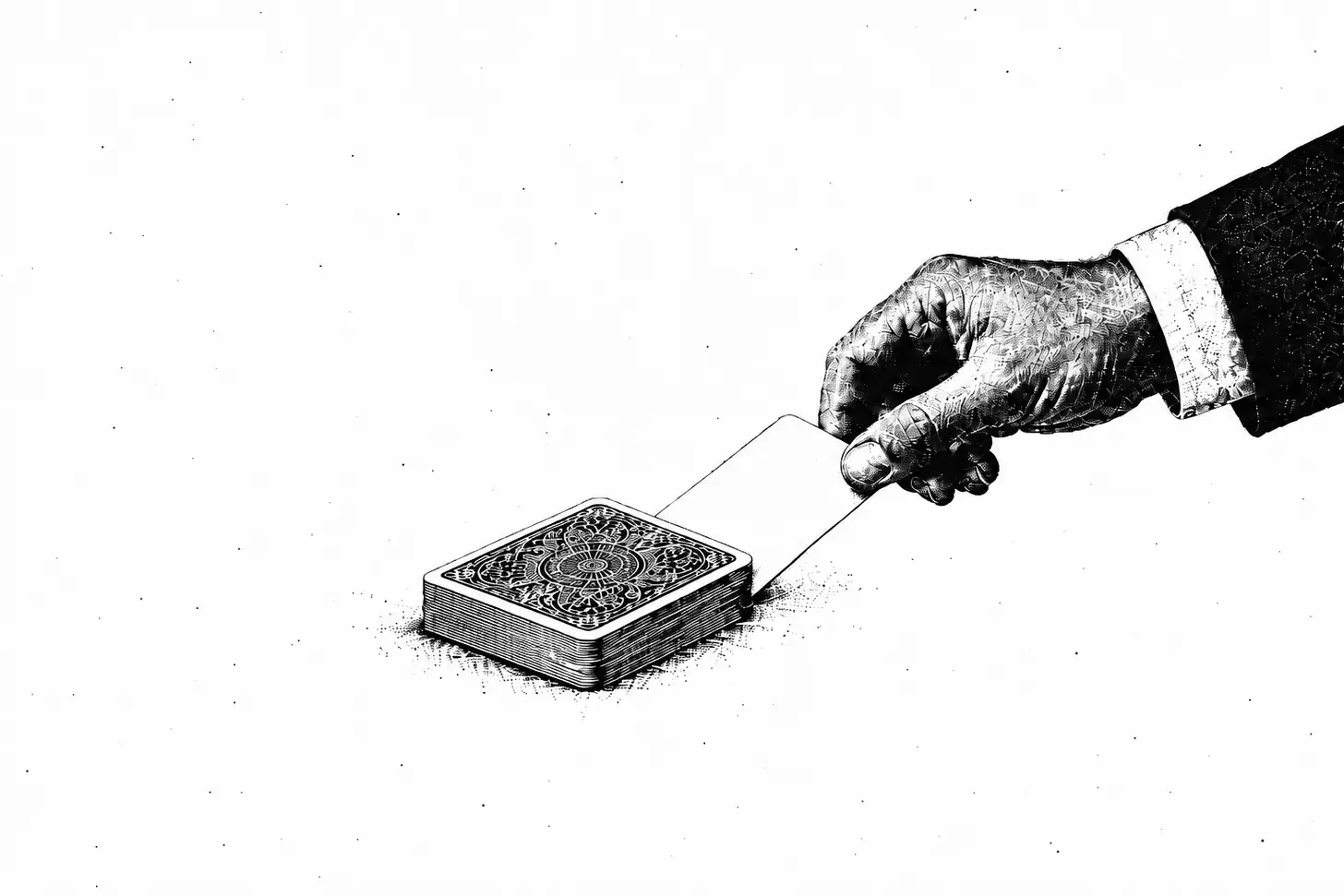
In 1975 a small black box appeared. Title: Oblique Strategies. Subtitle: Over One Hundred Worthwhile Dilemmas. Inside were cards with short, enigmatic sentences. A few words on each.
The deck was created by the painter Peter Schmidt and the musician Brian Eno. It was meant to help in those moments of creative work when every new attempt leads back to the same place. Each card proposed a small turn: a change of perspective, a different starting point, sometimes a surprising constraint. A way to walk around the problem and come back to it from another side, with a new idea.
Yet today ideas are in plentiful supply. We have generative artificial intelligence, and it can offer ten of them in a few seconds, or a hundred, or… infinitely many. So what actually happens to the quality of ideas when AI starts generating them?
Christian Terwiesch, Lennart Meincke, Karan Girotra, Ethan Mollick, Gideon Nave and Karl Ulrich decided to find out. They compared ideas for new products for students, priced at no more than 50 dollars. One pool came from students taking a product design course, the other was generated by GPT-4. What did they find? The AI-generated ideas scored higher on average for stated purchase intent and were about seven times more likely to land among the top 10% of rated proposals. There was a catch, though. As a set, these ideas were less diverse than the ideas of humans.
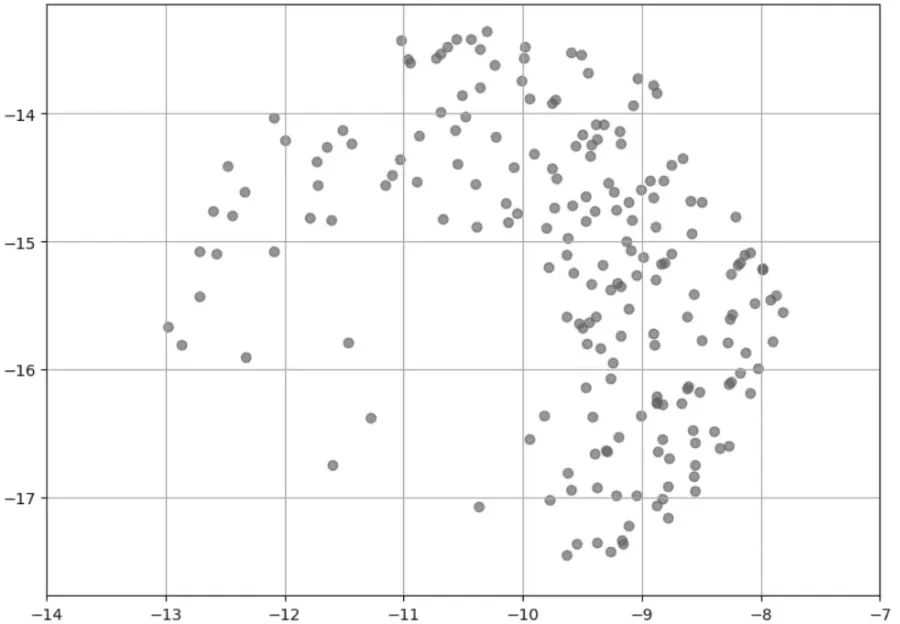
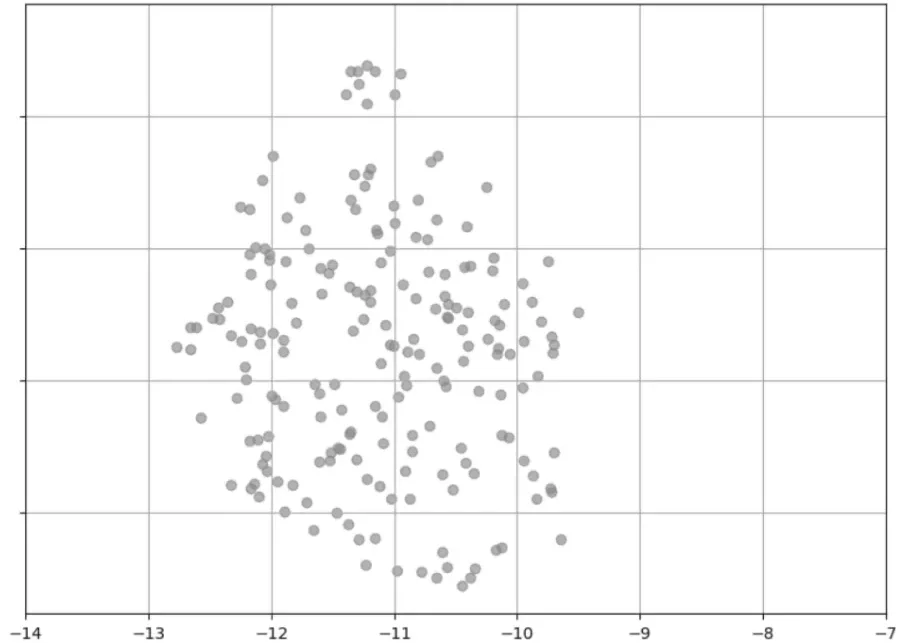
Each dot is one idea. The closer the dots lie to each other, the more similar the ideas. The students’ ideas spread widely, while GPT-4’s ideas cluster closer together. Source: C. Terwiesch et al. (2026), Production and Operations Management, fig. 3, CC BY-NC 4.0 licence.
In another study, Lennart Meincke, Ethan Mollick and Christian Terwiesch also tested whether AI can be led off those well-trodden paths. They tried different ways of phrasing instructions. It turned out that the way you ask really does matter: well-constructed prompts clearly increased the diversity of the generated ideas.
And here we return to Eno and Schmidt.
If in creative work with AI we want more than the first, most probable answer, it sometimes pays to stop asking directly: to change the perspective, impose a strange constraint, start in a less obvious place. In other words: to approach the algorithm obliquely.
That is why we prepared the Oblique Strategies for the Algorithm deck, inspired by Oblique Strategies and created for working with generative artificial intelligence too. On the front of each card there is a short, enigmatic strategy that points to a less obvious direction of thinking. On the back we turned it into a ready-made prompt to paste into the tool you use. You draw a card, reverse the way you look at the problem and see where a road leads that the algorithm would probably never choose on its own.
We also keep encouraging one thing: before you start a conversation with artificial intelligence, put the card of human intelligence on the table. Your own inventiveness is the best starting point for every solution… and every prompt.
Sources
C. Terwiesch, L. Meincke, K. Girotra, E. Mollick, G. Nave, K. Ulrich, Artificial intelligence and its impact on creativity and diversity: An empirical study of large language model-generated product ideas, Production and Operations Management (2026).
L. Meincke, E. Mollick, C. Terwiesch, Prompting Diverse Ideas: Increasing AI Idea Variance, preprint (2024).
B. Eno, P. Schmidt, Oblique Strategies: Over One Hundred Worthwhile Dilemmas (1975). Try it with us: Oblique Strategies.
Read next

Creative traces
A sandwich holder, a notebook on wheels and a key with a torch. What do these three objects have in common?
Tell it to someone…
Imagine waking up in the year 1726. You are in a cottage, at a table…

Design Thinking Toolkit
Looking for more inspiration?
Warm-ups, tools, videos, stories and data for working with the design thinking method. Pick one and get started.
Open the toolkit →